Explore our network of country and industry based websites to access localized information, product offerings, and business services across our group.
Log in to start sending quotation requests for any product.
Don't have an account? Sign Up Here
Log in now to access technical product documents from our product range.
Don't have an account? Sign Up Here
Home All Products Lead Acetate
|
IUPAC Name |
: Lead(II) diacetate |
|
Cas Number |
: 68855-56-1 |
|
HS Code |
: 3823.70.20 |
|
Formula |
: C26H54O |
|
Appearance Name |
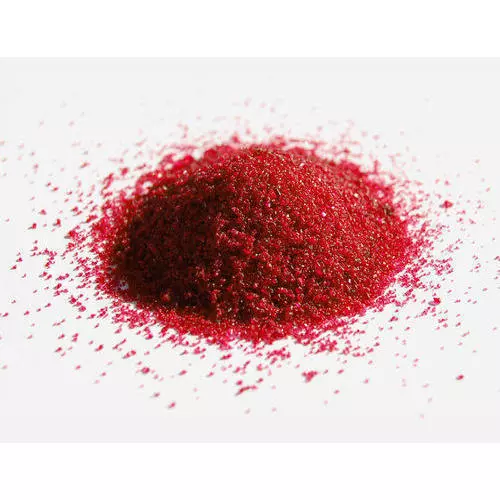
: White crystal |
|
Common Names |
: Plumbous Acetate, Lead(II) acetate |
|
Packaging |
: 170 kg Drum, 19.5 MT / Flexibag |
For more detailed information including pricing, customization, and shipping:
Brief Overview
Lead(II) Acetate is a colourless to whitish inorganic compound with the chemical formula C4H6O4Pb. This crystalline compound has a sweet taste. However, this Lead containing compound is very toxic. Lead Acetate is dissolves easily in water and glycerine. Lead Acetate Trihydrate is formed when Lead Acetate is dissolved with water. It is most widely used as a reagent for making other lead-based compounds.
Manufacturing Process
The commercial method of production of Lead Acetate is done by combining 3% Hydrogen Peroxide and 5% Acetic Acid in a reactor and then heating this mixture to boiling. Then Lead metal is added to this boiling mixture allowing Lead and the other components react, forming Lead(II) Acetate. After the reaction tends to completion, the reactor cools down to crystalize Lead Acetate. Next, the crystallized Lead Acetate is filtered and washed to remove any impurities followed by drying. Finally, send for size reduction operations such as crushing, grinding, screening, and classification in order to get the requisite size.
Cosmetic Industry
Lead Acetate, as such or along with White Lead, is widely used in hair colouring products. Some countries have banned the use of this substance due to its high toxicity.
Medical Industry
It also has a history of treating poison ivy related diseases, in addition to being used as an astringent.
Textile Industry
It is used as a mordant in textile printing presses.
Other Applications
It is also used as a drier in paints, varnishes and pigment inks; lead coating for metals; weighting silks; manufacture of lead salts, chrome-yellow; as the analytical reagent for detection of sulfide, determination of CrO3, MoO3.



 English

 العربية
 Español





















.webp)